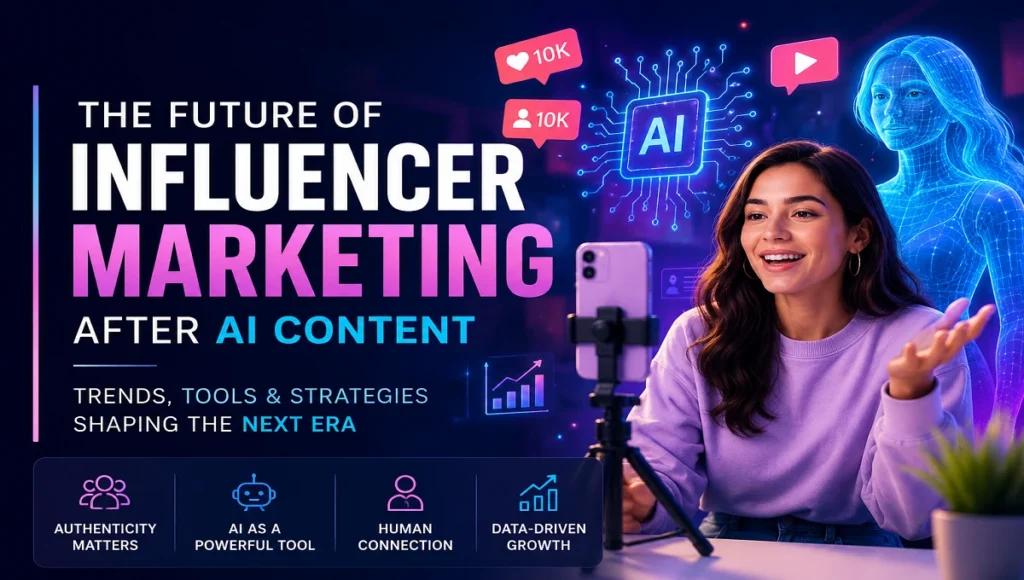
Artificial intelligence has changed content creation forever. From AI-generated videos and virtual influencers to automated captions and synthetic voiceovers, the digital world is moving faster than ever. But instead of replacing influencer marketing, AI is reshaping it into something smarter, more authentic, and more performance-driven.
The future of influencer marketing will not belong to creators with the biggest follower counts. It will belong to those who can build trust in an era flooded with AI-generated content.
Today, audiences can instantly recognize repetitive AI posts, generic scripts, and fake engagement. As a result, authenticity has become the most valuable currency online. Influencers who share real experiences, honest opinions, and human stories will continue to stand out, even as AI tools become more advanced.
Brands are already adapting. Instead of investing only in celebrity influencers, companies are increasingly partnering with micro and nano creators who have loyal communities and higher engagement rates. These smaller influencers often deliver stronger results because followers view them as relatable and trustworthy.
At the same time, AI is becoming a powerful assistant for creators rather than a replacement. Influencers now use AI to edit videos faster, generate content ideas, analyze audience behavior, and optimize posting schedules. This allows creators to spend more time building meaningful relationships with their communities instead of handling repetitive production tasks.
Virtual influencers are also becoming more common. AI-generated personalities like digital models and animated creators are already working with global brands. While these virtual influencers can attract attention, they still lack the emotional connection that real human creators naturally provide. Consumers may enjoy AI personalities for entertainment, but trust and emotional influence still come from real people.
Another major shift is the rise of data-driven influencer campaigns. AI tools can now predict audience interests, measure engagement quality, and identify fake followers more accurately than ever before. Brands will increasingly rely on these insights to choose influencers who deliver real business results instead of vanity metrics.
Video content will remain the center of influencer marketing, especially short-form videos on platforms like TikTok, Instagram, and YouTube. However, audiences will expect higher transparency. Creators who openly disclose AI-generated elements in their content may build stronger credibility with followers.
The future of influencer marketing is not human versus AI. It is human creativity enhanced by AI technology. The creators who succeed will be those who combine smart automation with genuine personality, emotional storytelling, and community trust.
As AI content becomes unlimited, real human connection will become even more valuable. That is why influencer marketing is not disappearing anytime soon. In fact, in the age of artificial intelligence, authentic influence may become more powerful than ever before.
Discover more from
Subscribe to get the latest posts sent to your email.