


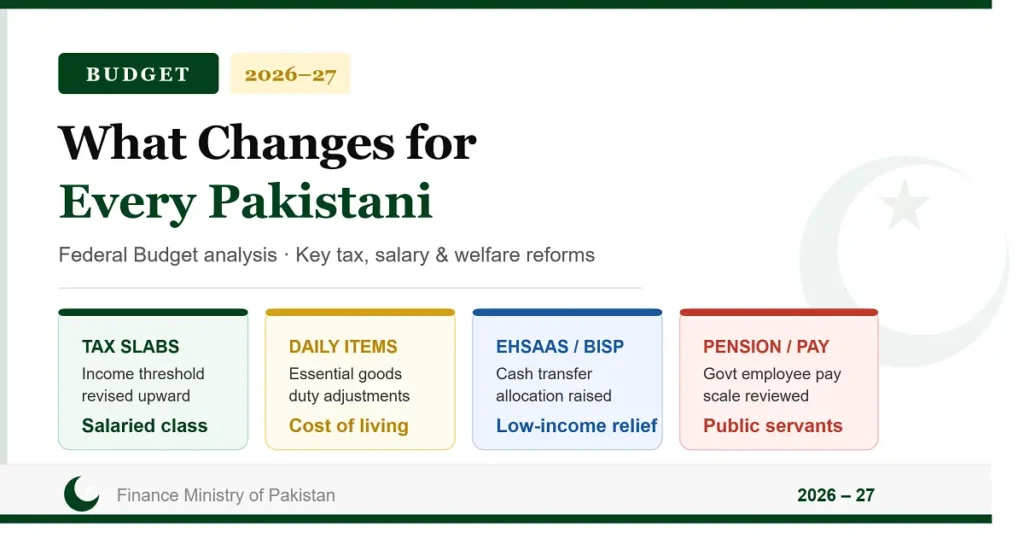
Finance Minister Muhammad Aurangzeb presented Pakistan’s federal budget for FY2026-27 on June 12 – a Rs18.77 trillion plan balancing IMF commitments with real relief for salaried workers and the common person.
Rs18.77T
Total Budget Outlay
4%
GDP Growth Target
Rs15.27T
Tax Revenue Target
Good News for Salaried Employees
Government employees and pensioners will receive a 7% increase in salaries and pensions, while the minimum wage has been raised by 10%. Beyond that, income tax slabs have been meaningfully revised downward – multiple brackets reduced, giving the salaried middle class genuine breathing room rather than the token adjustments seen in past budgets.
💡 Tax rates for those earning between Rs1.2 million and Rs2.2 million annually are set to come down — potentially the most impactful change for Pakistan’s growing middle class.
Everyday Goods: Cheaper or Pricier?
Some consumer products – including cosmetics, soap, and shampoo – may become cheaper thanks to revised tax adjustments. On the flip side, SUVs above 2,000cc face new Federal Excise Duty, pushing luxury vehicles into a higher price band. Electric and hybrid vehicles will also cost more, as the IMF opposed proposed tax relief on imported EVs.
The Bigger Economic Picture
Pakistan’s economy grew 3.7% in FY26, reaching a record $452 billion in size, while average inflation cooled dramatically to 6.7% from over 23% the previous year. The budget targets further progress, aiming for 4% GDP growth and 8.2% inflation in FY27 – ambitious but grounded in a stabilising economy.
With debt servicing consuming roughly Rs8.2 trillion and defence spending nearing Rs3 trillion, the government’s fiscal room is tight. But for the first time in years, a federal budget is generating genuine conversation about relief – not just survival.