

Every year, the internet surprises us with something new. Sometimes it’s a viral app. Sometimes it’s a shopping craze. But every once in a while, a trend appears that quietly changes how people live, work, and earn money.
This year, that trend isn’t about dancing videos or the latest AI filter.
It’s about ordinary people building multiple income streams online without becoming influencers or quitting their day jobs.

Why This Trend Is Different
Just a few years ago, making money online often sounded too good to be true. Many people believed you needed thousands of followers, expensive equipment, or advanced technical skills.
Today, that’s changing.
Free digital tools, AI assistants, online marketplaces, and creator-friendly platforms have made it easier than ever to start earning from home. Instead of relying on one big opportunity, people are combining several small income sources that grow over time.
This shift is creating a new generation of digital earners.
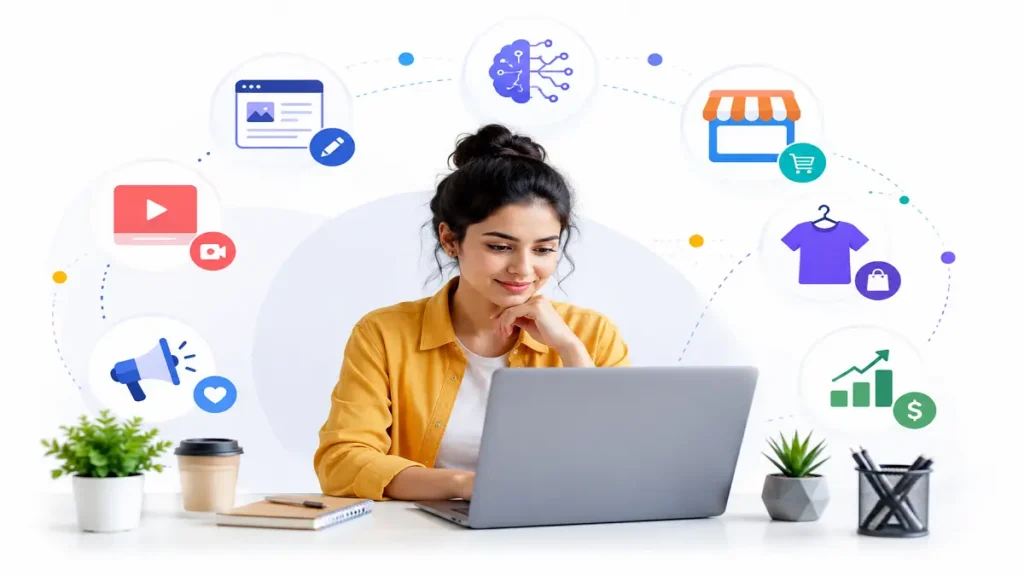
The Rise of “Micro Businesses”
Instead of building large companies, many people are creating simple online businesses that require very little upfront investment.
Examples include:
- Writing blog articles
- Selling digital templates
- Affiliate marketing
- Freelance services
- Print-on-demand products
- Online tutoring
- YouTube automation
- AI-powered content creation
None of these ideas are completely new.
What’s new is how easy modern technology has made them.
AI Is Changing the Rules
Artificial intelligence has dramatically reduced the time required to create content, design graphics, edit videos, and research ideas.
Tasks that once took hours can now be completed in minutes.
That doesn’t mean AI replaces creativity.
Instead, it allows creators to focus on solving problems, sharing knowledge, and producing better content faster than before.
People who learn to work alongside AI are discovering opportunities that didn’t exist just a few years ago.
Why More People Are Looking Beyond Traditional Jobs
The cost of living continues to rise in many parts of the world.
At the same time, remote work has become more common, and digital platforms have made global opportunities accessible to almost anyone with an internet connection.
Many people are no longer looking for a complete career change.
They’re simply looking for an extra source of income that provides more financial security.
That’s why side projects have become so popular.
Success Doesn’t Happen Overnight
Social media often shows overnight success stories.
Reality is different.
Most successful online creators spent months learning, testing ideas, and improving their skills before seeing meaningful results.
Consistency matters more than perfection.
Publishing helpful content every week usually beats chasing viral moments.
Skills Are Becoming More Valuable Than Degrees
Employers and clients increasingly care about what you can do rather than what certificate you have.
Learning practical digital skills like writing, graphic design, video editing, SEO, coding, or digital marketing can open doors to opportunities around the world.
The internet rewards people who solve problems.
Is This Trend Here to Stay?
While specific platforms will continue to change, the larger shift toward digital work appears to be gaining momentum.
Businesses need online content.
Consumers shop online.
Education is moving online.
Entertainment is increasingly digital.
These long-term changes suggest that online opportunities will continue growing.
How You Can Get Started
If you’re curious about joining this trend, begin with one simple step.
Choose a skill that interests you and dedicate just 30 minutes each day to learning it.
Start small.
Create consistently.
Improve with every project.
The biggest advantage isn’t starting early.
It’s starting before everyone else realizes the opportunity.
Final Thoughts
The online trend nobody saw coming isn’t a single app or viral challenge.
It’s the growing movement of ordinary people creating flexible, digital income streams using skills they can learn from home.
Technology has lowered the barriers.
The opportunities are expanding.
The question isn’t whether the digital economy will continue to grow.
The real question is whether you’ll be part of it.