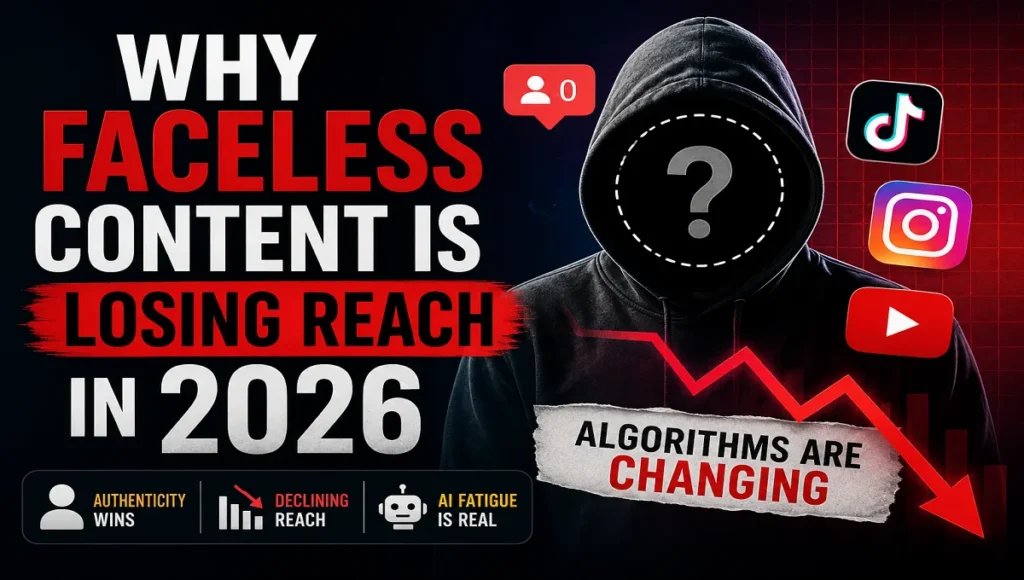
In 2026, faceless content is no longer the easy growth hack it once was. Across platforms like TikTok, Instagram, and YouTube, creators are seeing lower engagement, weaker reach, and declining audience trust. The reason is simple: social media users are exhausted by AI-generated, overly polished, anonymous content.
For years, faceless videos dominated short-form content. AI voiceovers, stock footage, and automated captions allowed creators to publish content at scale. But in 2026, algorithms are shifting toward authenticity, human presence, and trust signals. Reports show that audiences now prefer raw, personality-driven content over generic viral formats.
One major reason faceless content is losing reach is AI saturation. Social feeds are flooded with automated videos that look identical. Users can instantly recognize repetitive hooks, robotic narration, and recycled storytelling. This “AI content fatigue” is causing platforms to prioritize videos that feel human and original.
Even creators on Reddit are reporting massive drops in impressions for AI-heavy channels. Some claim YouTube’s latest updates are detecting AI narration patterns and reducing visibility for low-trust content formats.
Another big shift is the rise of “human-first algorithms.” In 2026, platforms reward content that creates conversations, watch time, and emotional reactions instead of passive scrolling. Videos showing a real face within the first second are reportedly performing far better than faceless clips.
This does not mean faceless content is completely dead. Educational brands, animation channels, podcasts, and storytelling pages still succeed without showing creators on camera. However, the winning formula has changed. Successful faceless creators now add human elements like personal voice clips, behind-the-scenes footage, opinions, or authentic storytelling.
Brands are also becoming cautious about faceless influencer marketing because trust matters more than follower count in 2026. Consumers want relatable creators, real experiences, and transparent communication instead of anonymous AI-style pages.
The future of content marketing is not about perfection anymore. It is about relatability, personality, and trust. Creators who combine AI tools with real human identity are outperforming those relying entirely on automation.
Discover more from
Subscribe to get the latest posts sent to your email.