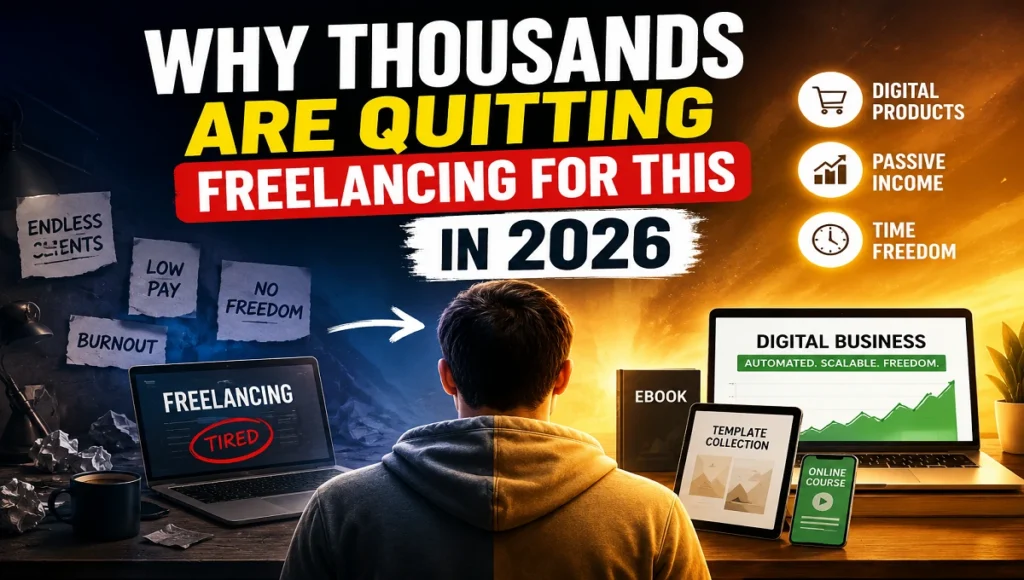
Freelancing was once seen as the ultimate path to freedom. Work from anywhere, choose your clients, and build your own schedule. But in 2026, a growing number of freelancers are walking away from client work and shifting toward something far more scalable: digital asset businesses.
From templates and online courses to niche newsletters and AI-powered tools, creators are discovering that selling products once is often more profitable than working hour by hour.
The biggest reason behind this shift is burnout. Freelancers spend years chasing deadlines, dealing with revisions, and constantly searching for new clients. Even successful freelancers often feel trapped in a cycle where income stops the moment they stop working.
Digital products are changing that equation.
Instead of trading time for money, creators are now building systems that generate income around the clock. A single Notion template, design pack, ebook, or AI prompt library can sell thousands of times with little ongoing effort. Platforms like Gumroad, Etsy, and creator marketplaces have made it easier than ever to launch products globally without a large audience.
AI has also accelerated the transition. Tasks that once required large teams can now be completed faster with automation tools. Many freelancers are realizing that the same skills they used for clients can be repackaged into scalable products and resources.
For example, a graphic designer may stop relying entirely on client projects and start selling Canva templates. A copywriter might launch swipe files or content systems. Developers are building lightweight AI tools and micro-SaaS products that generate recurring revenue.
Another major factor is stability. Freelancing income can fluctuate heavily from month to month, especially during economic slowdowns. Product-based businesses create more predictable income streams and offer long-term growth potential.
This doesn’t mean freelancing is disappearing. Instead, it’s evolving. Many people now use freelancing as a starting point to build expertise, then transition into digital businesses that provide more freedom and scalability.
In 2026, the internet economy is rewarding ownership more than labor. And for thousands of freelancers, that shift is becoming impossible to ignore.
Discover more from
Subscribe to get the latest posts sent to your email.