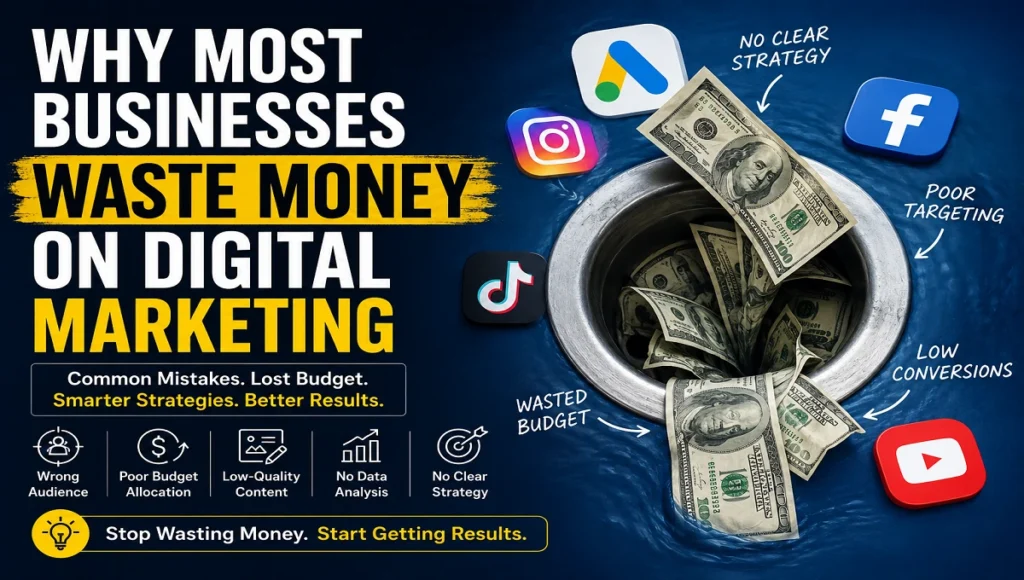
Digital marketing has become essential for businesses of all sizes, yet many companies continue to spend thousands of dollars without seeing meaningful results. The problem is rarely the marketing channels themselves-it’s often how businesses use them.
One of the biggest mistakes companies make is focusing on traffic instead of conversions. Getting thousands of website visitors may look impressive, but if those visitors aren’t becoming customers, the marketing investment is being wasted. Successful businesses prioritize lead generation, sales, and customer retention rather than vanity metrics.
Another common issue is targeting the wrong audience. Many businesses launch advertising campaigns without clearly understanding who their ideal customers are. As a result, their ads reach people who have little interest in their products or services. Effective digital marketing starts with audience research and precise targeting.
Many businesses also spread their budgets too thin across multiple platforms. Instead of mastering one or two channels, they try to be everywhere at once-Facebook, Instagram, TikTok, LinkedIn, Google Ads, and more. This approach often leads to mediocre results. Focusing on the platforms where customers are most active usually delivers a better return on investment.
Poor content is another reason marketing budgets go to waste. Today’s consumers are exposed to countless advertisements every day. Generic posts, low-quality videos, and overly promotional content rarely capture attention. Businesses that create helpful, educational, and engaging content tend to outperform competitors that focus solely on selling.
A lack of data analysis is also a major problem. Digital marketing provides valuable insights into customer behavior, but many businesses fail to track performance properly. Without monitoring metrics such as conversion rates, cost per lead, and customer acquisition costs, it’s impossible to know what’s working and what isn’t.
In 2026, businesses are also making the mistake of ignoring artificial intelligence. AI tools can help optimize campaigns, personalize customer experiences, and identify opportunities for improvement. Companies that fail to adopt these technologies risk falling behind more efficient competitors.
The good news is that digital marketing doesn’t have to be expensive to be effective. Businesses that focus on clear goals, targeted audiences, quality content, and data-driven decisions can achieve strong results without wasting money.
The companies that win in digital marketing are not necessarily the ones that spend the most-they’re the ones that spend the smartest.
Discover more from
Subscribe to get the latest posts sent to your email.