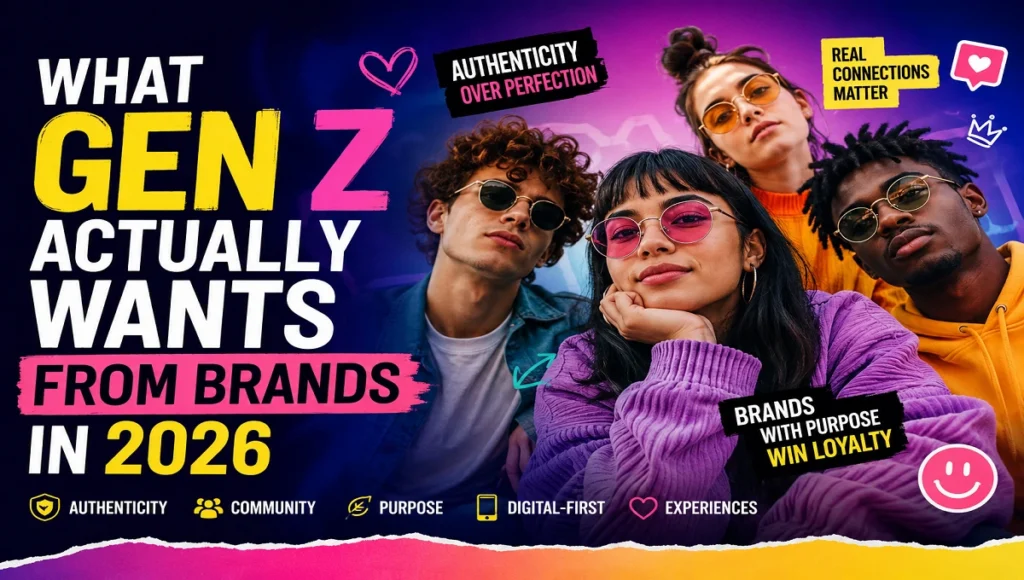
In 2026, Gen Z is no longer the “next generation” of consumers — they are shaping culture, driving trends, and influencing how brands communicate online. But unlike previous generations, Gen Z doesn’t just buy products. They buy values, experiences, and authenticity.
Brands that still rely on polished ads and corporate messaging are struggling to connect. Gen Z wants something different: realness.
Authenticity Over Perfection
Perfect branding no longer works the way it used to. Gen Z prefers raw, relatable content over highly edited campaigns. They trust creators, employees, and real customers more than traditional advertisements.
Short-form videos, behind-the-scenes content, and unfiltered storytelling perform better because they feel human. Brands that admit mistakes, show personality, and communicate honestly earn long-term loyalty.
In 2026, authenticity is not a marketing strategy — it’s the baseline expectation.
Purpose Matters More Than Promises
Gen Z pays attention to what brands stand for. Sustainability, ethical sourcing, diversity, mental health awareness, and social responsibility all influence purchasing decisions.
But this generation is also highly skilled at spotting performative activism. Empty campaigns and trend-based messaging without real action often backfire.
Consumers want proof. They expect brands to show measurable impact, transparent policies, and consistent behavior across platforms.
Community Is the New Marketing
Gen Z values belonging. The most successful brands today create communities instead of simply selling products.
Private Discord groups, interactive TikTok campaigns, livestream events, and creator collaborations help consumers feel involved rather than targeted. People want to participate in conversations, not just receive advertisements.
Brands winning in 2026 are the ones making customers feel seen, heard, and included.
Fast Content, Faster Interaction
This generation grew up in a real-time digital world. They expect fast responses, personalized communication, and constant engagement.
A delayed reply on social media can damage trust just as quickly as a poor product experience. Gen Z appreciates brands that communicate casually, respond quickly, and adapt to internet culture without sounding forced.
Memes, trends, and humor still matter — but relevance matters more.
Quality Still Wins
Despite the focus on culture and content, Gen Z still expects quality. Good storytelling may attract attention, but poor products lose customers instantly.
Reviews, user-generated content, and online discussions heavily influence buying behavior. One viral negative experience can shape public perception overnight.
That’s why successful brands in 2026 combine strong products with transparent communication and community-driven marketing.
Final Thoughts
Gen Z wants brands that feel real, act responsibly, and create meaningful connections. They reward transparency, creativity, and consistency — while quickly rejecting anything that feels fake or outdated.
For brands in 2026, the challenge is no longer just getting attention. It’s earning trust in a generation that values authenticity above everything else.
Discover more from
Subscribe to get the latest posts sent to your email.