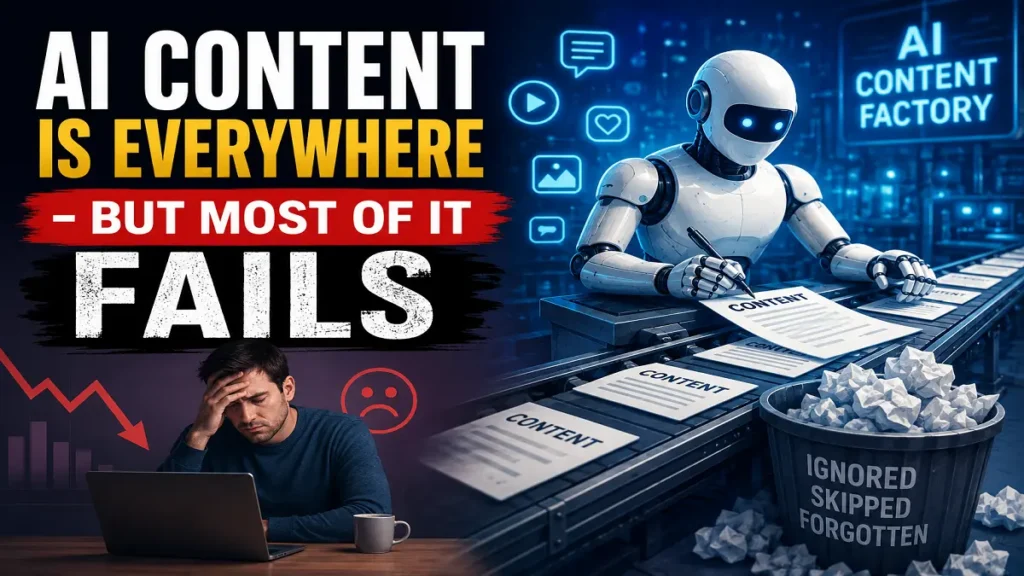
Artificial intelligence has completely transformed the way content is created. From blog posts and social media captions to product descriptions and marketing emails, AI tools can now generate content in seconds. As a result, the internet is being flooded with AI-written articles every day.
But there’s a problem: most AI content fails to attract readers, rank on search engines, or generate meaningful engagement.
Why?
The answer is simple. While AI can produce words quickly, it often struggles to create content that feels genuinely useful, original, and human.
In 2026, audiences have become smarter. Readers can instantly recognize generic content that simply repeats information already available online. Search engines are also evolving rapidly. Platforms like Google increasingly prioritize content that demonstrates real expertise, experience, and unique insights rather than mass-produced text.
Many website owners assumed AI would be a shortcut to unlimited traffic. They published hundreds of AI-generated articles without adding original research, personal experiences, or expert opinions. Instead of growing, many of these websites saw declining engagement and lower visibility.
The most successful publishers are taking a different approach.
Rather than replacing human creativity, they use AI as an assistant. AI helps with brainstorming, outlining, research organization, and first drafts. Human writers then refine the content, add examples, share experiences, verify facts, and create a unique voice that readers can connect with.
This hybrid strategy is proving far more effective than relying entirely on automation.
Another major issue is content saturation. Since AI tools can generate thousands of articles on the same topic, competition has become intense. Simply publishing another article about a popular subject is no longer enough. Content must provide a fresh perspective, solve a real problem, or present information in a way that stands out.
Visual storytelling is also becoming increasingly important. Articles that combine strong writing with original images, videos, data, and expert commentary tend to perform better across search engines and discovery platforms.
The future of content marketing is not about choosing between AI and humans. It is about using both strategically. AI can increase productivity, but authenticity remains the key factor that earns trust and attention.
As more AI-generated content fills the web, truly valuable content becomes even more important. The websites that focus on quality, originality, and reader experience will continue to win, while those relying solely on automated content may struggle to stay visible.
In a world where AI content is everywhere, the real advantage isn’t producing more content—it’s creating better content.
Discover more from
Subscribe to get the latest posts sent to your email.