

Imagine being locked up with no explanation, no trial, and no end in sight. Sounds like something from a dystopian novel, right? But without habeas corpus, that could be reality for anyone.
So, What Exactly Is Habeas Corpus?
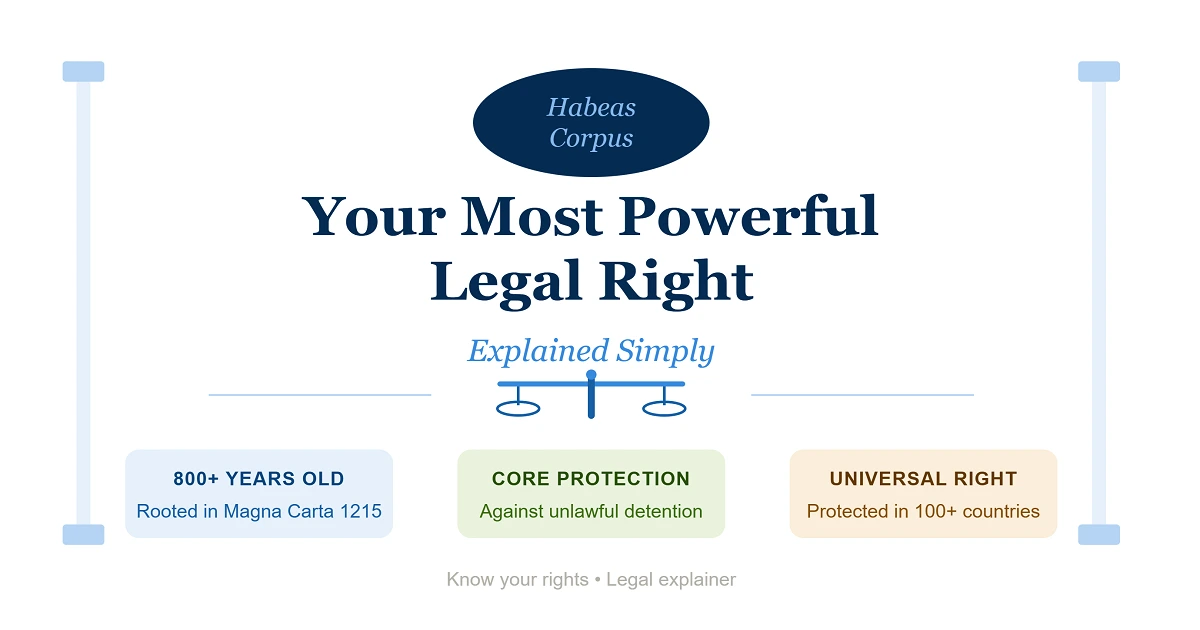
The term comes from Latin, meaning “you shall have the body.” In plain terms, it’s a legal right that lets any imprisoned person demand that a court review whether their detention is lawful.
Think of it as a legal emergency brake – a way to stop the government from holding someone without a valid reason.
Why Does It Matter to You?
Habeas corpus is often called the “great writ of liberty.” Here’s why it’s such a big deal:
- It protects against unlawful imprisonment. No one – not even the government – can jail you without legal justification.
- It keeps courts in check. A judge must review the case and decide if the detention is legal.
- It applies to everyone. Citizens, non-citizens, and even individuals held in military custody can use it.
A Quick History Lesson
Habeas corpus traces back to England’s Magna Carta (1215) and was formally codified in the Habeas Corpus Act of 1679. The United States later enshrined it in the Constitution (Article I, Section 9), making it one of the few rights explicitly written into the original document – before the Bill of Rights even existed.
Can It Ever Be Suspended?
Yes, but only in extreme circumstances. The U.S. Constitution allows suspension during rebellion or invasion when public safety demands it. It has only been suspended a handful of times in American history, most notably during the Civil War.
The Bottom Line
Habeas corpus isn’t just a fancy legal term – it’s the bedrock of personal freedom. It ensures that liberty cannot be taken away without due process. In a world where power can be abused, this ancient writ remains one of the most vital safeguards we have.
Know your rights. Habeas corpus is one of the oldest and most important ones.
Discover more from
Subscribe to get the latest posts sent to your email.
