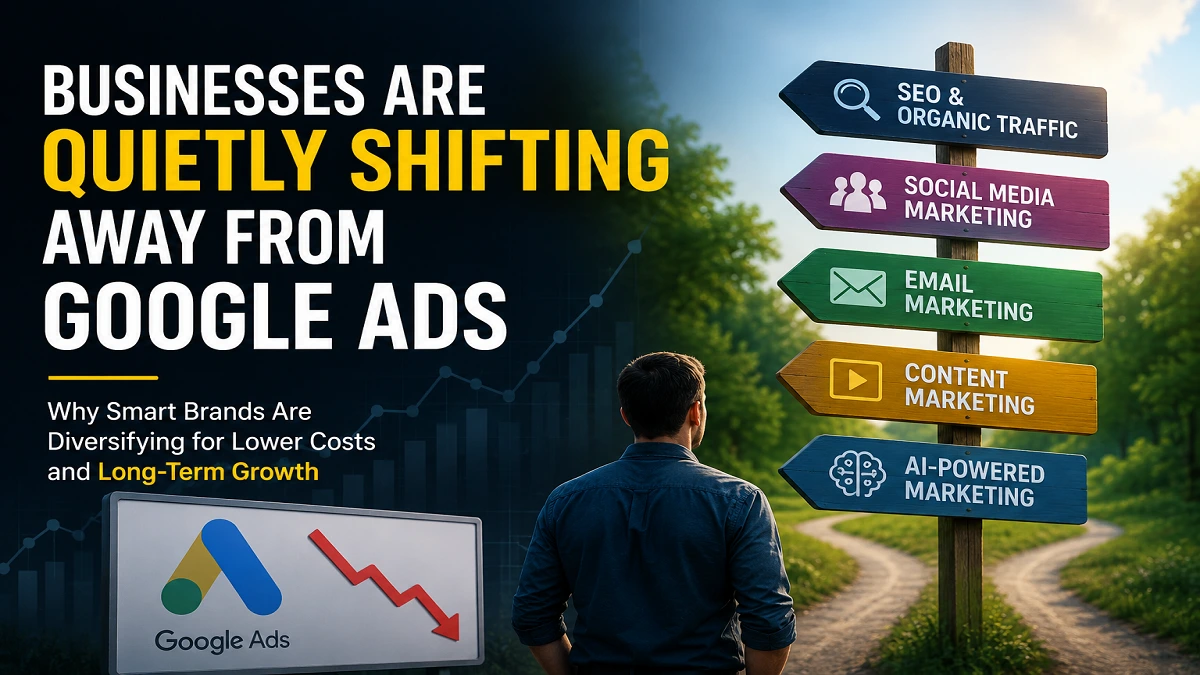


For more than a decade, Google Ads has been the go-to platform for businesses looking to attract customers online. But in 2026, a growing number of companies are quietly reducing their dependence on Google Ads and exploring alternative marketing channels.
The reason is simple: rising advertising costs and changing consumer behavior.
Many businesses report that the cost of acquiring customers through Google Ads has increased significantly over the past few years. As more advertisers compete for the same keywords, cost-per-click (CPC) rates continue to climb. For small and medium-sized businesses, maintaining profitable campaigns has become increasingly difficult.
At the same time, consumers are spending more time on social platforms, video content, and AI-powered discovery tools. Platforms like TikTok, Instagram, YouTube Shorts, and LinkedIn are becoming major sources of product discovery. Instead of searching on Google, users are often finding brands through creators, recommendations, and short-form content.
Another factor driving this shift is the rise of owned media. Businesses are investing more heavily in email marketing, SEO, communities, and content creation. These channels may take longer to build, but they often generate sustainable traffic and customer relationships without requiring constant ad spend.
Artificial intelligence is also changing the landscape. AI tools can now help businesses create content, automate customer interactions, and optimize marketing campaigns at a fraction of the cost. This allows companies to diversify their marketing efforts rather than relying on a single advertising platform.
However, this doesn’t mean Google Ads is disappearing. For many industries, it remains one of the fastest ways to generate leads and sales. The difference is that businesses are becoming more strategic. Instead of allocating most of their budget to paid search, they’re spreading investments across multiple channels to reduce risk and improve long-term results.
The companies seeing the strongest growth in 2026 aren’t abandoning Google Ads entirely—they’re building marketing ecosystems that combine SEO, social media, email marketing, AI tools, and paid advertising.
As digital marketing continues to evolve, diversification is becoming the new competitive advantage. Businesses that adapt early may find themselves less dependent on rising ad costs and better positioned for sustainable growth.
Discover more from
Subscribe to get the latest posts sent to your email.
