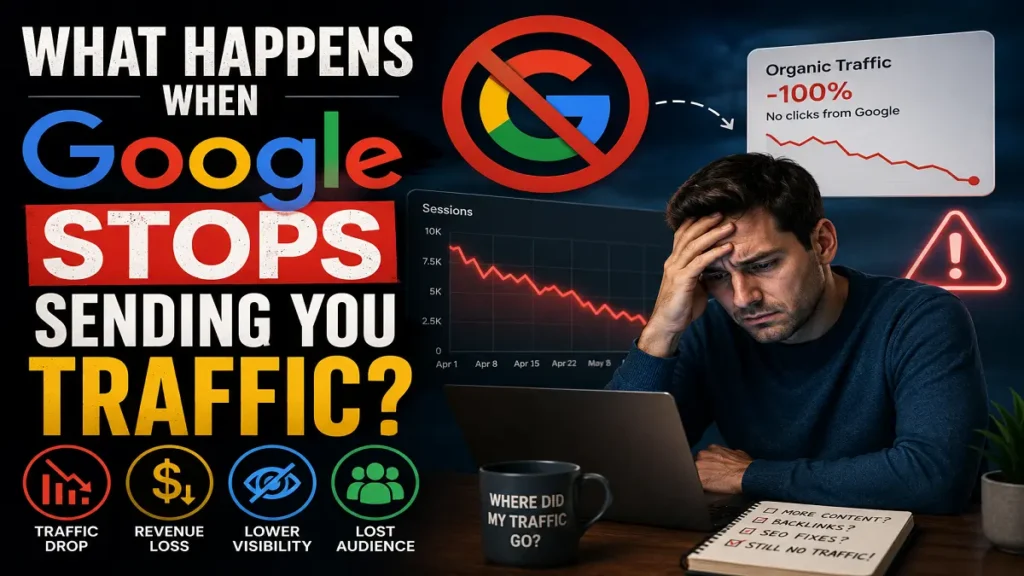
For years, website owners have relied heavily on Google for traffic. A strong ranking on search results could generate thousands of daily visitors, leads, and sales. But in 2026, many publishers are facing a difficult reality: Google traffic is no longer guaranteed.
With AI-powered search experiences, changing algorithms, and increased competition, websites that once thrived on organic traffic are seeing dramatic declines. So what happens when Google stops sending visitors to your site?
The first impact is usually a drop in revenue. Businesses that depend on ad impressions, affiliate marketing, or organic lead generation often experience an immediate decline in earnings. Fewer visitors mean fewer opportunities to convert readers into customers.
The second challenge is reduced visibility. Many website owners assume that publishing more content will solve the problem. However, today’s search landscape rewards quality, expertise, and unique insights rather than simply producing large volumes of articles. Sites filled with generic content often struggle to recover after traffic losses.
Another major issue is overdependence on a single platform. If Google accounts for 80% or more of a website’s traffic, any algorithm update can create serious business risks. This is why digital marketers increasingly emphasize traffic diversification.
Successful publishers are building audiences beyond search engines. Email newsletters, social media communities, video platforms, podcasts, and direct brand searches are becoming essential sources of traffic. When visitors actively seek out a brand instead of discovering it through search, the business becomes more resilient.
The rise of AI-generated search summaries is also changing user behavior. In many cases, users receive answers directly on search pages without clicking through to websites. As a result, publishers must create content that offers deeper insights, original research, expert opinions, and unique experiences that cannot be easily summarized.
Rather than focusing solely on rankings, smart website owners are prioritizing audience loyalty. They encourage newsletter signups, community engagement, and repeat visits. Building a recognizable brand often proves more valuable than chasing temporary search rankings.
The good news is that losing Google traffic does not have to mean losing your business. Many companies have successfully adapted by expanding their content strategy, strengthening their brand presence, and creating multiple channels for audience growth.
The future of digital publishing belongs to businesses that own their audience relationships. Search traffic can still be valuable, but it should be viewed as one part of a larger strategy rather than the foundation of an entire business.
When Google stops sending traffic, the websites that survive are not necessarily the biggest. They are the ones that have built trust, diversified their traffic sources, and created value that keeps people coming back.
Discover more from
Subscribe to get the latest posts sent to your email.